🧽 A Cleaner Finish
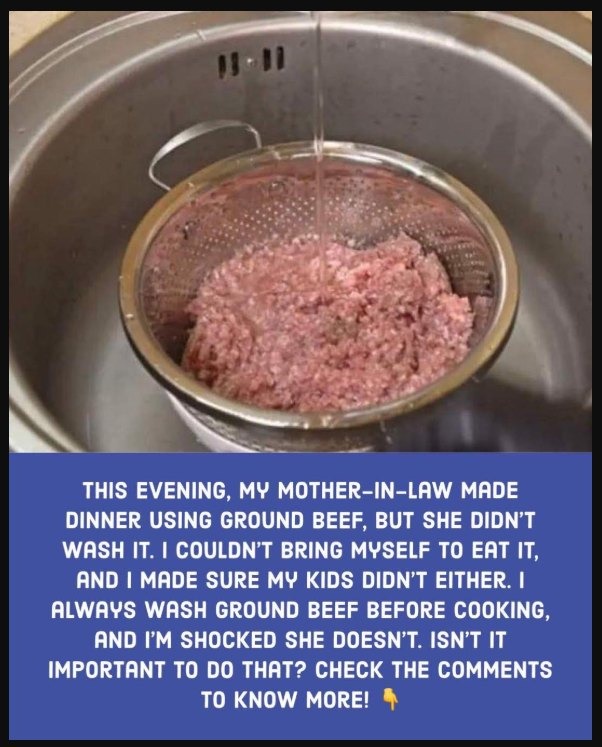
For dishes where a less oily base is preferred (like sloppy joes, stuffed peppers, or baked ziti), rinsing helps reduce oiliness in the final dish.
It also makes mixing into other ingredients easier—no floating grease droplets interfering with texture.
The Case Against Rinsing Ground Beef
🧑🍳 Flavor Loss
Many professional chefs and food scientists warn against rinsing because it can strip away more than just fat—it removes flavor and moisture , too.
Fat contributes to:
Juiciness
Richness in taste
Better browning during searing
Rinsing may leave you with bland, dry meat that lacks depth.
💧 Texture Troubles
Washing ground beef—especially after cooking—can cool the meat too quickly and make it less tender.
And if not drained properly, it can lead to a watery sauce or dish, which is especially problematic in dishes like chili, tacos, or meatloaf.
The Mess Factor – What to Consider
🚰 Splatter & Cleanup
Washing ground beef—especially while hot—can create a messy situation:
Grease splatters everywhere
Water mixes with fat, creating a slippery cleanup challenge
Drains can get clogged over time as fats harden
Instead of rinsing, many experts suggest a smarter approach :
Cook the beef until browned
Let drain in a colander
Press with paper towels to soak up excess grease
This avoids mess, keeps flavor, and prevents plumbing issues.
Food Safety First
The USDA does not recommend washing raw meat before cooking—including ground beef.
Why?
Rinsing raw beef increases risk of cross-contamination in the sink and countertop
Splashing water spreads bacteria like E. coli or Salmonella to surfaces and utensils
Washing doesn’t kill bacteria—it just moves it around
If you’re concerned about fat, choose leaner cuts (90/10 or 93/7) instead of rinsing high-fat varieties.
What About After Cooking?
Some people prefer to rinse after cooking —especially when making ground beef for salads, lettuce wraps, or low-fat meals.
While this can help reduce grease and calories, it’s not always necessary:
Use a slotted spoon to skim fat from the pan
Place cooked beef on paper towels to drain
Add a bit of broth or water to sauces to balance oiliness
There’s no one-size-fits-all answer—it really comes down to personal preference and cooking style .
Pros and Cons Summary
Pros
Cons
✅ Reduces fat and calories
❌ Removes natural flavor and juiciness
✅ Helps control grease in dishes
❌ Can dry out the meat if over-rinsed
✅ Works well for low-fat diets
❌ Increases cleanup and splatter risk
✅ Good for visual appeal in some dishes
❌ Risk of cross-contamination if done with raw meat
So… Should You Wash Ground Beef? The Verdict
Ultimately, whether you rinse your ground beef depends on:
Your dietary goals
The type of recipe you’re making
Your kitchen habits and tools
✅ Go ahead and rinse if:
You’re using high-fat beef
You’re aiming for a lighter meal
You don’t mind the extra step
❌ Skip the rinse if:
You’re using lean beef
Flavor and moisture are key
You want to avoid mess and contamination
It’s All About Balance
Ground beef is one of the most versatile ingredients in the pantry—but how you handle the fat can change everything.
Whether you’re a rinsing proponent or a fat-saving purist , the bottom line is simple:
Cooking is personal. There’s no right or wrong way—as long as your food is safe, tasty, and fits your lifestyle.
So next time you’re at the stove—go with the method that works best for you.
Because once you find your perfect balance—you’ll be enjoying every bite even more.
